One of the TED video in the lecture was about globalization of power and its mutual dependency.
It is often said that SF predicts the future. Many SFs talk about the emergence of world governments and the unity of the common problems of humankind. Star Trek, the famous movie, and Starcraft, the most influential game in Korea, also appear in the world government. Interestingly, Star Trek is a relatively democratic coalition, while Starcraft is a military dictatorship.
I think that the imagination of this sci-fi was on social culture. Therefore, I think that globalization of power and mutual dependency will lead to world government and human community. And political globalization will ultimately lead to the creation of a world government. Because economic and cultural globalization is strengthening the homogeneity of mankind. On the other hand, international issues such as global warming and depletion of resources can not be solved by individual countries. For this reason, we think that the present UN will enter into a looser world federation. Whether such a federal government will be a centralized dictatorship, as it is treated in SF, or whether the autonomy of constituent states will be respected depends on the determination of the global civil society.
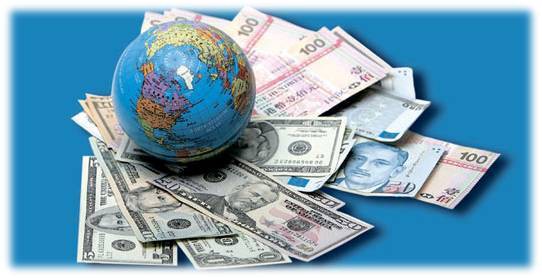
Economic globalization is one of the three main aspects of globalization, along with political globalization and cultural globalization, which means the free movement of goods, capital, services, technology and information. With the strengthening of cross-border mobility of goods, services, technology and capital, the economic integration and interdependence of national, regional and local economies is increasing worldwide. While globalization is an extensive series of processes involving networks of economic, political, and cultural exchanges, modern economic globalization is driven by the rapidity of information in all types of production, marketization, and technological development. Economic globalization consists mainly of globalization of production, finance, markets, technology, organizational systems, institutions, enterprises and labor. While economic globalization has expanded since the advent of transnational trade, it has increased steadily as communications and technology advances in the framework of the General Agreement on Tariffs and Trade and the WTO framework. Reduce trade barriers and open current and capital accounts. The economic boom leads to greater integration with the majority of the world through foreign direct investment, lowering the cost of doing business, reducing trade barriers, and in many cases, the support of developed countries that support overseas migration. Globalization will dramatically increase income and economic growth in developing countries, lower consumer prices in developed countries, and change the balance of power between developing and developed countries, affecting the culture of each country. And as the position of production has changed, many jobs have resulted in crossing borders, and some workers in developed countries need to change jobs.
International commodity markets, labor markets and capital markets constitute the economy and define economic globalization. From 4000 BC people were trading livestock, tools and other items. In the Sumerian civilization of Mesopotamia, the token system was one of the first forms of commodity money. The labor market consists of workers, employers, wages, income, supply and demand. The labor market is as old as the commodity market. The first labor market provided workers to grow livestock to grow crops and sell them later in the local market. Capital markets have emerged in industries that require resources that transcend the resources of individual farmers.
2) Influence of technology development
Globalization connects all the people of the world over geographical boundaries. This progress of economic globalization has been confounded by the First World War. The majority of the world's economies have established protectionist economic policies and introduced trade barriers to delay trade growth until the recession. This has slowed global trade and has even created other countries with immigrant caps. Globalization has not been fully resumed until the 1970s when the government began to emphasize trade interests. The development of technology today has led to the rapid expansion of world trade. Three factors, such as the development of science and technology, market-oriented economic reform and the contribution of multinational corporations, have accelerated economic globalization. In 1956, the invention of container transportation was a major part of the reduction of shipping costs with increasing ship size.
Economic globalization is one of the three main components of globalization that is common in academic literature and the other two are general terms of globalization as well as political globalization and cultural globalization. The GATT / WTO system has encouraged participating countries to reduce tariff and non-tariff barriers to trade. The government has transformed the economy from central planning to market. These internal reforms have allowed companies to adapt more quickly and take advantage of technology change opportunities. Multinational corporations have reorganized production to take advantage of these opportunities. Labor-intensive production moved to lower labor costs, followed by other functions as skill levels increased. The network has increased the level of wealth. With a global system of consumption and geographical mobility that is very dynamic and a strong ripple effect, the London Stock Exchange has established new deregulation rules that enable the market's global interconnections, expecting a significant increase in market activity. This case became known as Big Bang finance theory.
3. Discussion point
Economic globalization has had many positive impacts on the world, but it was as negative as that. In particular, there is a problem of unfair trade and very low profits for primary producers when exporting to developed countries in developing countries. Fair trade is offered as an alternative. Fair Trade is a social movement based on the market model of international trade in order to facilitate the payment of fair prices as well as social and environmental standards in various regions in relation to the production of various goods. The movement focuses specifically on exports from developing countries to advanced countries, mainly handicrafts, coffee, cacao, nose, wine and fruit. The purpose of fair trade is to work with producers and workers who have been thrown away from the competition carefully, to help them escape from vulnerable conditions so as to ensure their stability and economic self sufficiency. It is also aimed to give them the ability to become self-reliant by allowing them to own shares in their own organizations and to play a more active and broader role in the international arena in order to gain even more fairness in international trade.
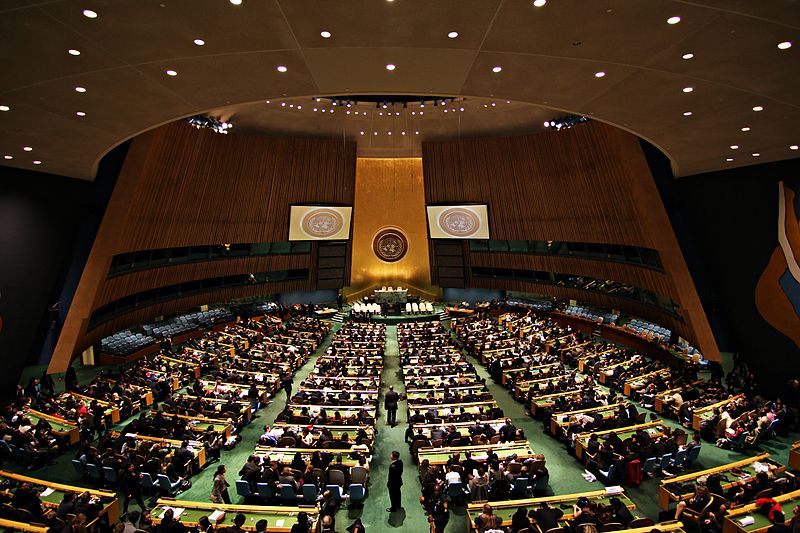
Political globalization means the growth of a global political world, especially in terms of the size and complexity of politics. The system includes intergovernmental organizations as well as independent governmental elements of the global civil society such as national governments and their governments, and international NGOs and social movement organizations. One of the main aspects of political globalization is the diminishing importance of the nation state and the increase of other actors in the political scene. The existence and formation of the United Nations (UN) has been called one of the classic examples of political globalization.
William R. Thompson defines this as an extension of the world political system and that their institutions manage transactions between the regions. Valentine M. Moghadam describes this as "towards the emergence of an increasingly multinational, transnational nationalism, and to the emergence of national and international non-governmental organizations acting as government watchdogs, This is an increase."
Manfred B. Steger defined "the strengthening and expansion of political interrelationships around the world" and Colin Croke said, "Globalization is a process of globalization that is driven by the forces of global governments, such as the World Bank, the International Monetary Fund and the World Trade Organization Increase. However, it also refers to the proliferation and influence of international non-governmental organizations, and social movement groups and transnational support networks are active at the borders and constitute a global civil society." Finally, Gerard Delanti and Chris Rumford define this as "the tension between the three processes that create the complex realm of global politics, the global norms, the global norms, and the three processes that interact with the network of multi-centrism".
Political globalization is one of the three main dimensions of globalization that can be found in academic literature, including economic globalization and cultural globalization.
[United Nations General Assembly Hall in the UN Headquarters, New York, NY]
Salvatore Babones points out that the materials used by scholars to study political globalization are the Europa World Year Book for diplomatic relations between countries and the International Institute for Strategic Studies such as The Military Balance for military content Publications, and terrorism, emphasizes the usefulness of the US government publication Patterns of Global Terrorism.
Political globalization can be measured by data and weights on the number of embassies and senior officials in a country, the number of international organizations affiliated with it, the number of UN peacekeeping missions participated, and the number of international treaties concluded with other countries. This scale was used by Axel Dreher, Noel Gaston, Pim Martens, and Jeffery Haynes and is available at KOF institute at ETH Zurich.
2) Various aspects of the phenomenon
Like globalization, political globalization has several aspects and leads to many interpretations. It has been discussed not only in the context of autonomous loss and division of social globalization, but also in the context of the possibility of a new liberation. Political globalization can be seen in democratization of the world, creation of world civil society, and movement out of the bounds of nationalism, in particular changes such as the only actors in the political field. Some questions at the heart of the discussion on political globalization are related to the future of the nation state. Whether its significance is diminishing and what is the cause of such a change; And to understand the emergence of the concept of global government. The creation and survival of the United Nations has been called a classic example of political globalization. Political actions by non-governmental organizations and social movements on various topics such as environmental protection are another example.
David Held suggested that political globalization, which continues through criticism of this insight as overly idealistic, could lead to the creation of world governments such as international democracy.
3. Discussion point
There is a hot debate between political globalization and countries. The question is whether political globalization represents the decline of the nation state. Hyper Globalists argue that globalization has enveloped today's world in such a way that the national boundaries begin to lose their meaning. But skeptics believe that the nation - state remains an important role in international relations.
Cultural globalization refers to the transmission of ideas, meaning and global values in a way that enhances expansion and social relations. In modern times, and at the beginning of the 20th century, this process is marked by the general consumption of culture spread by the Internet, popular culture media, and international travel. It has a long history with the meaning of global culture and added to the process of commodity exchange and colonization.
Cultural circulation enables individuals to participate in extended social relationships across national and regional boundaries. The expansion of creation and social relations is not observed only at the material level. Cultural globalization involves the formation of shared norms and knowledge that link people's cultural identities with their own individuals and groups. This provides an incremental interaction between different groups and cultures.
(Source : Genius learning encyclopedia)
2. Key concepts and phenomena
1) DETERRITORIALIZATION
In general, the concept of culture is implicitly associated with speciality and territory. It was the assumption that culture was subject to physical space constraints and that it was accompanied by limited integration.
However, the complex and abstract connections that globalization brings have weakened this concept. Globalization has overcome the restriction of the region.
The most fundamental characteristic of globalization is the de-territorialization caused by complex social and economic union and proliferation. This means that the area covered and experienced in everyday life will expand and become more connected.
Furthermore, the weakening of the correlation between cultural experience and geographic boundaries is the broadest impact of cultural globalization.
2) COSMOPOLITANISM
Cosmopolitanism is the ideology of realizing a world society that regards all human beings as one and individual units. It is ideal to move away from the state of the state and realize a world state by excluding the peculiar values and prejudices of the state.
Hegel's world history, which was settled by war, is called the world court, and the global civilization is backed by the full-fledged nationalism with the French Revolution. In this context, the leftist internationalist movement focusing on 'international' such as Marxism and anarchism attracts attention. In Marx and Engels' Communist Party Declaration, 'Workers do not have a homeland', claiming 'unity of workers all over the world'. At the same time, however, he argued that 'the proletarian class must become a citizen by itself by acquiring political domination'. In Marxism, internationalism was not distinguished from the cosmopolitanism of 'people without root', not denying the unit of the people. The tendency to emphasize the nation along with the class became stronger in the 20th century when Marxism 's influence reached the developing regions and accompanied the national liberation struggle. And that cosmopolitanism was bourgeois.
In the 20th century, the socialism 's internationalism was also defeated by nationalism and two world wars erupted. The United Nations, which was created by reflection on the post-Cold War era, was restricted by the Cold War ethics, but nonetheless, interdependence deepened and the international community became more real. After the Cold War, the globalization was further advanced and the framework of the national state was remarkably shaken. Now, the international community is not only formed by inter-state relations, but also by NGOs such as multinational corporations and civic movements, and by international media. The idea of citizens living in them is not only an international but also a re-evaluation of cosmopolitan views It is being urged.
3) CULTURAL IDENTITY
Cultural identity is a sense of identity or belonging to a particular group that has been influenced by various countries, races, gender, religion, and so on. This identity is created by communication, values of group and family members, faith, and important personal experience.
There is a difference in individual cultural identity. You will be influenced by a variety of factors, including groups that naturally use the new language, favorite groups that love analog machines, groups that love rap, or classics, and groups that play with Barbie at a young age.
And in the global age, when people meet and communicate with each other, these differences can be found without difficulty. There are mistakes made by people who do not understand the words of the Japanese people who express the rejection in a roundabout way, and mistakes made when they do not know that it is politely unfit to fill the empty cup of the German person in the drink.
The sense of cultural identity to be encountered as much as the various countries of the planet is also diverse.
Through the identification of the traditional existence that exists in the modern life, it is possible to reaffirm the legitimacy of life and to strengthen the cultural identity within it. This is directly related to the meaning of the existence of one's life, and the festival can be an important mediator of this process. The number of festivals and the number of festivals are increasing beyond measure in Korea as well as at the global level.
4) CULTURE HOMOGENIZATION and CULTURAL CONVERGENCE
Cultural homogenization is a phenomenon in which cultural characteristics of one region are the same or similar in other regions.
Examples include the proliferation of popular culture such as hamburgers, coke, fast food restaurants, coffee shops, Hollywood movies, pop music, and jeans in the United States.
The tendency to become uniform in Western culture appears, and the cultural uniqueness of individual countries is weakened. There are also cultural and economic inequalities among countries.
Cultural convergence is a phenomenon in which the culture that has spread according to globalization is mixed with local culture according to the characteristics of each region. Two different cultures combine to form a new third form.
For example, there are local burgers, California rolls, stone beds with Korean Ondol and Western beds, Bollywood movies in India, and K-pop in Korea.
3. Discussion point
Today, the international society is no longer established by the relationship between nations. But also by NGOs and international media, such as multinational corporations and civic movements.
As a citizen's idea of living in this world, the necessity of a cosmopolitan view is raised not only as an international. How do you think about this?
If internationalization refers to the phenomenon of the quantitative increase in the exchange of national states, globalization refers to the process by which the world society acquires its own dimension by newly reconstructing modern social life beyond the expansion of quantitative exchange. Globalization places importance on world society as an analytical unit.
This globalization is faced with positive, negative, and eclectic. First, the theory of affirmation suggests that globalization brings about development for mankind by strengthening a single global market and competitive principles. They are optimistic about the consequences of globalization, arguing that globalization brings prosperity to the world community, as many countries have comparative advantage in trade.
It is the theory of negativity against globalization. This inaccuracy can be divided into two views. One view that focuses on the negative consequences of globalization is the view that human globalization is possible through social movements. If the former emphasizes that the ongoing globalization is strengthening the domination of the world economy by the transnational capital and the inequalities at the global level, Anti-humanitarianism, anti-globalization movement.
The third view contrasts with positive theory and negative theory. This compassion theory sees globalization as a two-sided process that has both positive and negative aspects. They argue that globalization can not be seen as either blessing or disaster, and thus emphasizes that the dichotomy of globalization must be reconsidered. For them, globalization is a new opportunity to improve economic and cultural life as well as a crisis that strengthens global inequality. The eclecticism calls for a balanced understanding of globalization and emphasizes value judgment based on fact judgment.
Robertson claims that the world has become a place. This argument has had a great impact on social science. Globalization is taking place in the fields of economy, culture and politics. What is remarkable in the globalization of culture is Americanization tendency. Today, the influence of American popular culture and lifestyle, represented by Hollywood movies, pop music, and Disneyland, has grown ever larger. This cultural restructuring at the global level is accelerating global trends in that it has a greater impact on everyday and cultural life and consciousness than any Western policy and technology.
(Source : George Ritzer, "The McDonaldization of Society", Sioux City, 2003)
2. Significance and Evaluation
Globalization is a concept to understand global social change in recent years. Since the 1997 financial crisis, there has been a double-sided evaluation of this globalization, On the other hand, if the emphasis is on aggressive acceptance of globalization, on the other hand, it is argued that critical acceptance or rejection of globalization is necessary.
Taking a step back, globalization is a two-sided process that has both positive and negative aspects. Globalization is a new opportunity to improve economic and cultural life as well as a crisis that strengthens global inequality. What is important is that globalization is increasingly influencing Korean society. Therefore, a more comprehensive and in-depth understanding of globalization is required, and a more aggressive and multifaceted response strategy to globalization should be sought.
3. Discussion point
Through the text, we can see that the evaluation of globalization is confronted with positive, negative, and eclectic. Today, economic, cultural, and political globalization has not only a significant impact on the decisions of national states, including governments, but its influence is growing. How can we evaluate globalization in this situation?





.jpg)